
Build a House in Maine: Everything You Need to Know Before Breaking Ground

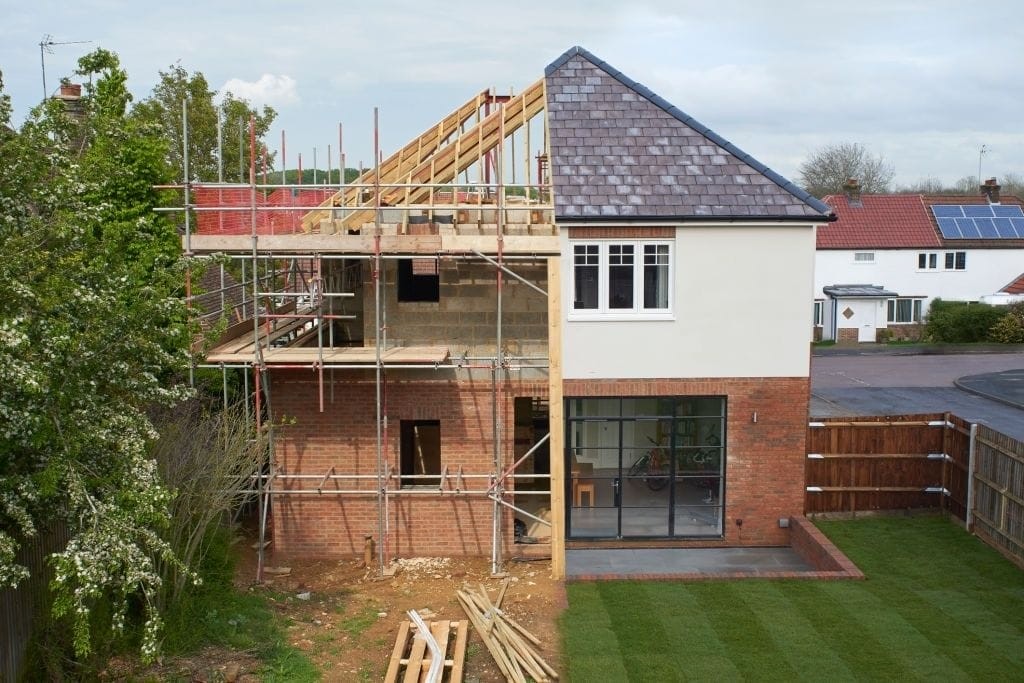
The moment you put a shovel in Maine’s ground — or, more accurately, the moment you try to — you’ll discover that building here requires more preparation than in almost any other state. Rocky terrain, strict shoreland zoning, complex permit systems, and a limited skilled trades pool make pre-construction planning the most important phase of any Maine custom build.
This guide covers everything buyers need to know before breaking ground — so you don’t break your budget and your timeline in the process.
Step 1: Lot Selection — The Most Important Decision You’ll Make
In Maine, the lot you choose determines everything else: your foundation type, your utility strategy, your permit timeline, and your long-term enjoyment of the property. Before you make an offer on any lot, answer these five questions:
- Has the lot been percolation-tested?
If you’re on private septic (which applies to the majority of rural Maine lots), a perc test determines whether the soil can support a septic system — and what type. A failed perc test can make a lot unsellable or require a very expensive engineered system. Cost of testing: $500–$1,500. Cost of skipping it and finding out at permit time: potentially $30,000+ in alternative system requirements.
- Are there wetlands on or adjacent to the property?
Maine’s Mandatory Shoreland Zoning Act and federal Section 404 wetland regulations restrict building within 75–250 feet of wetlands, streams, and water bodies. Have a wetlands delineation conducted by a licensed Maine wetlands scientist before purchasing any lot with apparent low areas, stream channels, or proximity to water.
- What are the setback requirements?
Maine municipalities set minimum setbacks from property lines, roads, wetlands, and shorelines. A 5-acre lot that looks wide open on paper can have a buildable area of only a half-acre once setbacks are applied. Request the local zoning ordinance and have your builder verify buildable footprint.
- Is utility access available — or will you need well and off-grid power?
In Greater Portland and most urban areas, municipal water, sewer, and electric are available. In rural Maine — which covers the majority of the state’s land area — you’ll need a private well and septic, and potentially a longer electric service run. Budget accordingly: well + septic can add $20,000–$60,000 to project costs.
- What’s under the surface?
Maine’s granite geology means ledge can appear anywhere. A ledge probe — essentially a series of small test borings — costs $500–$2,000 and tells you what’s beneath the surface before you commit to a foundation design. This is the cheapest insurance available for a Maine build.
Maine Building Permits: County-by-County Reality Check
The Maine Uniform Building and Energy Code (MUBEC) establishes statewide building standards, but permit administration is handled at the local (municipal) level. This creates enormous variation in permit timelines:
- Portland: Full-time building department. Average permit timeline: 6–14 weeks for new residential construction
- Falmouth, Scarborough, Cape Elizabeth: Well-staffed departments. Average: 4–10 weeks
- Smaller Cumberland County towns: 6–12 weeks
- Rural Penobscot and Aroostook County towns: Often handled part-time. Average: 3–8 weeks — but scheduling inspections during construction can be challenging
- Shoreland Zoning overlay: Any lot within 250 feet of a water body requires a Shoreland Zoning permit in addition to a building permit — add 4–12 weeks
Maine also requires a Subsurface Wastewater Disposal permit from the Maine DEP for any new septic system — typically a 4–8 week process handled by a licensed Site Evaluator working with your builder. See /custom-home-builder-maine for how a good design-build firm manages this entire permit process on your behalf.
Site Preparation in Maine: What You’re Actually Paying For
Site prep in Maine is not the same as site prep in a flat-terrain state. Here’s what the line items actually mean:
- Clearing and grubbing: Removing trees, stumps, and brush from the build footprint and access road. Cost: $3,000–$15,000 depending on tree density
- Topsoil stripping and stockpiling: Removing organic topsoil from the foundation area and saving it for final grading. Cost: $2,000–$5,000
- Ledge investigation and removal: If ledge is encountered, blasting and removal by a licensed Maine blaster. Cost: $5,000–$40,000+ depending on extent
- Excavation for foundation: Digging to frost-depth (48 inches). Cost: $8,000–$20,000
- Driveway base prep: Gravel base for construction access, later finished as permanent driveway. Cost: $5,000–$20,000 depending on length
- Temporary utilities: Power and water for construction phase. Cost: $2,000–$6,000
Maine’s Build Season: Planning Around the Weather
Maine’s climate imposes a natural build calendar that buyers from warmer states don’t anticipate:
- Optimal start window: May–June. Frost is reliably out of the ground, and you have maximum construction days before fall
- Foundation pour deadline: Concrete should not be poured when temperatures are consistently below 40 degrees — typically mid-October in most of Maine
- Winter framing: Framing can continue through winter with heated enclosures, but at significantly higher cost
- Ideal move-in window: The following April–June, giving a full 10–12 months from spring groundbreaking
Builders who start your project in June are setting you up for a potential first winter partially enclosed. Builders who start in May or earlier give you the full building season. Ask any prospective builder: ‘What is your planned groundbreaking date and why?’
Working With a Design-Build Firm vs. Managing It Yourself
As your build progresses from lot selection through permitting to construction, the coordination burden grows dramatically. A design-build firm — one company that handles design, permitting, and construction — eliminates the coordination gaps that cause cost overruns and delays in owner-managed projects.
The design-build model is particularly valuable in Maine because:
- One team manages the permit relationships across multiple agencies (building, DEP, shoreland zoning)
- Design decisions account for Maine’s specific construction requirements from the start — not as afterthoughts
- Construction delays trigger immediate design solutions from the same team — no finger-pointing between architect and contractor
Visit Custom Home Builders Maine for your free pre-construction consultation. We’ll assess your lot, explain the permit process, and give you an honest project timeline before you commit to anything.